← मुख्य पन्ना2 मिनट का पाठ
इवेंट रिपोर्ट
10 Strange and Fascinating Facts About the Banded Mongoose
They live in large social groups. Banded mongooses live in “mobs” (also called gangs) of up to ~40 members. These groups help with protection, foraging, and raising young.
I
Isabella Clark
रिपोर्टर
डेस्क नोट
नीचे आयोजन की पूरी रिपोर्ट और महत्वपूर्ण अपडेट पढ़ें।
डेस्क
ग्लोबल इवेंट
Interesting Facts & Behaviors
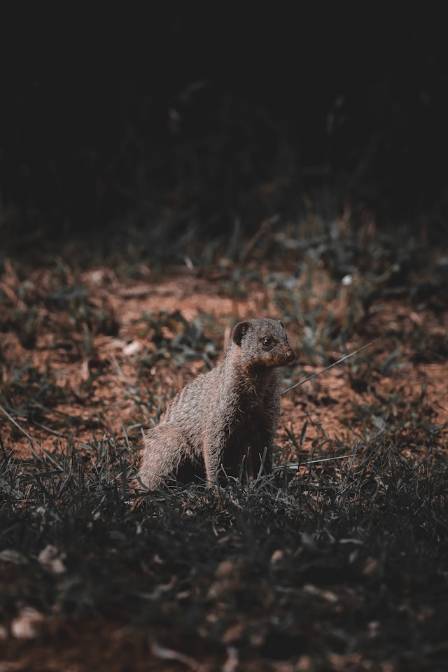
1.They live in large social groups.
Banded mongooses live in “mobs” (also called gangs) of up to ~40 members. These groups help with protection, foraging, and raising young.
2.Pups get an “escort.”
Young pups are assigned adult escorts—usually older members (often males)—who guide them and protect them during foraging. The pups tend to follow these specific adults.
3.Communal or group parenting.
All females in a group often give birth around the same time, and there is shared care of the pups. For example, females may nurse each other’s offspring, forming a sort of “daycare” among the group.
4.They have a “secret weapon” against snakes.
Banded mongooses are known for taking on venomous snakes. Their agility helps dodge strikes, and when they attack together in numbers, they can overcome snakes despite not being immune to venom.
5.Vocal communication is rich.
They use many different vocalizations (squeaks, chirps, growls) to communicate: coordinating group movements, warning of danger, staying connected during foraging, etc.
6.Territorial group “wars.”
When different mobs meet, they can be quite aggressive—engaging in territorial clashes that may last hours and occasionally cause injuries or even death.
7.Egg-cracking “tool use.”
They sometimes use “rock-tossing” behavior to crack hard-shelled foods like bird eggs. For example, tossing an egg between their legs toward a rock to break the shell.
8.Synchronized births.
Females in the same group tend to give birth within a few days of each other. This synchronicity helps with communal parenting, shared nursing, and protection of all the young together.
9.Picky grooming habits.
After foraging, the group often grooms itself carefully. Grooming helps reduce parasites and strengthens the social bonds within the mob.
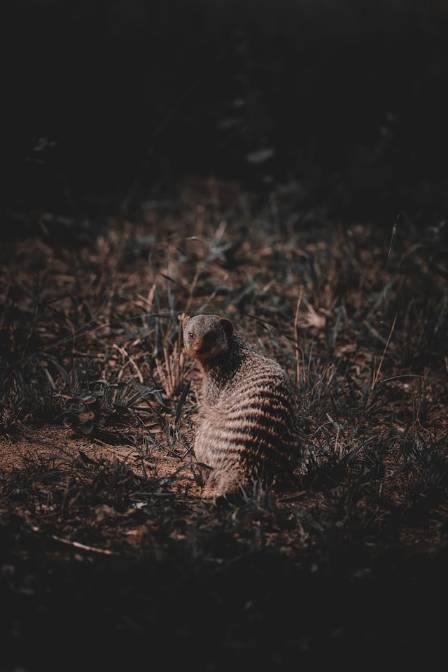
10.Seen often at Needles Lodge.
These banded mongooses are part of the local wildlife around Needles Lodge, Kruger National Park; guests may see them roaming the grounds, foraging, interacting socially, etc.
Notes, Accuracy & Caveats
Some of the details may be more popular-science style rather than rigorously evidenced. For example, tool use (egg cracking) is not as well backed in scientific literature for this species as it is for primates or crows; so that claim might reflect occasional observations rather than a well-documented behavior.
“Synchronized births” is documented in many mongoose species, including banded mongoose, but timing can vary depending on environmental cues like rainfall.
Territorial confrontations (“wars”) are known in many social mongoose species; how often they result in serious injury might depend heavily on habitat density, resource availability, etc.