इवेंट रिपोर्ट
Essential Knowledge Regarding the Giant Panda
The giant panda is a globally recognized symbol of wildlife, admired for its distinctive appearance and gentle nature. Observing National Panda Day provides a perfect opportunity to explore the specific habits and ecological requirements of these bears. Understanding their biology and the challenges they face is the first step toward ensuring their continued survival in the natural world.
Lindsey Howard
रिपोर्टर
डेस्क नोट
नीचे आयोजन की पूरी रिपोर्ट और महत्वपूर्ण अपडेट पढ़ें।
डेस्क
ग्लोबल इवेंट
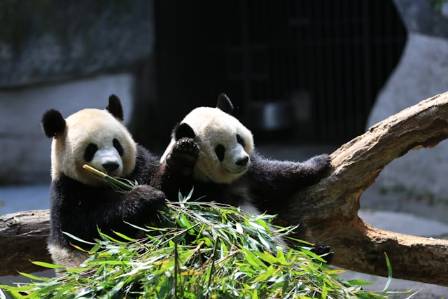
The giant panda is a globally recognized symbol of wildlife, admired for its distinctive appearance and gentle nature. Observing National Panda Day provides a perfect opportunity to explore the specific habits and ecological requirements of these bears. Understanding their biology and the challenges they face is the first step toward ensuring their continued survival in the natural world.
Solitary Lifestyles and Territorial Range
Unlike more social species, mature pandas generally prefer a secluded existence. They are predominantly solitary animals that only seek out others during the mating season. Females are particularly protective of their personal space and tend to be highly territorial. On average, an individual panda maintains and defends a home range that covers approximately two square miles of forest.
Dietary Habits and the Pseudo-Thumb
While classified as bears, giant pandas are essentially herbivores. Their survival depends almost entirely on the consumption of bamboo. Because bamboo is high in cellulose and provides very little caloric energy, pandas must spend the majority of their waking hours eating to sustain their large frames.
To manage this constant feeding, the panda has developed a unique anatomical feature often mistaken for a thumb. This "extra digit" is actually a modified wrist bone that has grown large enough to act as a thumb. This adaptation provides the bears with the manual dexterity required to grip, peel, and navigate tough bamboo stalks with ease.
Camouflage and Regional Variations
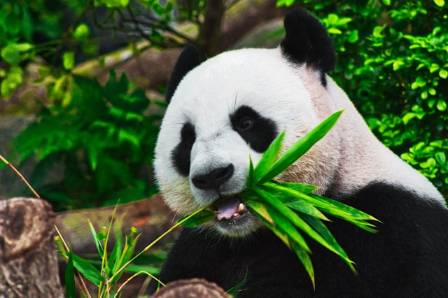
The panda's iconic black-and-white fur is more than just an aesthetic trait; it serves as a sophisticated form of camouflage. The contrasting patches allow the bear to disappear into the varying light and shadows of a dense bamboo forest, helping them remain inconspicuous in their environment.
There are actually two recognized subspecies of these bears. The most famous variety is found in China’s Sichuan province. A much rarer subspecies inhabits the Qinling Mountains in the Shaanxi region. These Qinling pandas are typically smaller and possess a brown-and-white coat rather than the traditional black-and-white pattern. It is important to note that neither of these is related to the red panda, which is a separate, endangered species found in the Himalayas.
Early Development and Conservation Status
Giant pandas give birth to remarkably small offspring. Due to a very brief gestation period, a newborn cub weighs only about four ounces. This makes panda infants the smallest offspring of any placental mammal relative to the mother's size. Born blind and completely dependent, these cubs require exhaustive maternal care for several months before they can survive on their own.
While intensive conservation work in China has successfully upgraded the panda’s status from "endangered" to "vulnerable," they still face significant risks. Historically, poaching and habitat destruction were the primary drivers of their decline. While captive breeding programs exist to prevent extinction, the most effective way to protect the species is by preserving their natural bamboo forests. Ending the illegal wildlife trade remains a critical priority for ensuring that giant pandas and other vulnerable species can thrive in the wild for generations to come.
संबंधित अपडेट

· hi
बाहर निकलने के स्वास्थ्य लाभ
मयंक

· en
Best SUVs of 2026
Benjamin Clark

· en
LED Technology Illuminates Cities: 20 Iconic Displays Worldwide
Vicky

· en
9 Common Mistakes to Avoid for Your T-Shirt Designs
Mia

· en
The Wild Evolution of Rally Racing and Its Most Mind Blowing Historical Moments
Connor Ellis
· hi
दुनिया के शीर्ष 10 सबसे बड़े घास के मैदान
वेद