इवेंट रिपोर्ट
Enhancing Robotic Awareness: Advanced Strain Sensing for Autonomous Systems
Modern robotics and Autonomous Mobile Robots (AMRs) often operate without a complete "sense of touch," leading to undetected mechanical stress, minor collisions, and grip instability. Conventional sensors, such as wrist-mounted force-torque units or motor current monitors, typically only capture data at the extremities of a system. This leaves internal components—like fingers, joints, and structural frames—vulnerable to fatigue, overload, and micro-deflections that peripheral sensors simply cannot see.
Vincent Miles Hawthorne
रिपोर्टर
डेस्क नोट
नीचे आयोजन की पूरी रिपोर्ट और महत्वपूर्ण अपडेट पढ़ें।
डेस्क
ग्लोबल इवेंट
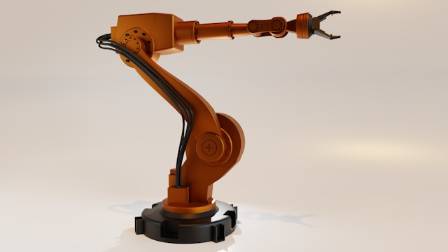
Modern robotics and Autonomous Mobile Robots (AMRs) often operate without a complete "sense of touch," leading to undetected mechanical stress, minor collisions, and grip instability. Conventional sensors, such as wrist-mounted force-torque units or motor current monitors, typically only capture data at the extremities of a system. This leaves internal components—like fingers, joints, and structural frames—vulnerable to fatigue, overload, and micro-deflections that peripheral sensors simply cannot see.
By integrating high-resolution strain sensors directly into the internal architecture of a machine, engineering teams can eliminate blind spots. This local awareness prevents unplanned downtime, improves picking precision, and detects structural wear long before a failure occurs. Moving sensing from the "wrist" to the "bone" of the robot allows for safer human-robot collaboration and a significant boost in operational uptime.
STREAL: A Semiconductor-Grade Force and Torque Platform
The STREAL platform is a micro-strain sensing solution designed to be embedded within the very structure of robotic joints, grippers, and frames. Each module measures axial strain with a resolution as fine as 0.1 µε, converting physical stress into digital signatures for real-time analysis. Rather than relying on a single external transducer, this technology enables a distributed network of compact nodes that provide localized signals without requiring a major mechanical overhaul.
While traditional 6-axis sensors remain valuable for absolute load measurement, embedded strain gauges complement them by providing data where space is limited. This localized feedback results in higher precision during delicate approach motions and better contact awareness. By identifying binding or fatigue early, facilities can shift from reactive repairs to proactive, data-driven maintenance.
Specialized Sensor Modules for Diverse Industrial Needs
To meet different operational requirements, two primary sensor tiers are available, ranging from low-power mobile applications to high-precision industrial monitoring.
SR300: Optimized for Mobility and IoT
Designed specifically for battery-powered nodes and wireless retrofitting, the SR300 is ideal for AMRs. It offers a 1 µε resolution with a signal bandwidth of 1.3 kHz, all while consuming less than 3 mW of power. Its compact 2.5 mm² die size allows it to fit into the tightest mobile chassis.
SR500: High-Precision Industrial Sensing
For applications demanding extreme accuracy, such as industrial robot arms and high-speed spindles, the SR500 provides a 0.1 µε resolution. It supports a signal bandwidth of up to 20 kHz and includes on-chip amplification, temperature compensation, and self-diagnostics within a 3.2 mm² footprint.
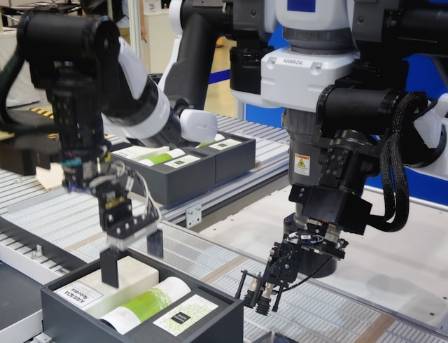
Strategic Placement Across Robotic Assemblies
The versatility of embedded strain sensing allows it to be deployed across various critical points of a robotic system to gather specific, actionable data.
End Effectors and Precision Grippers
By mounting sensors directly onto the jaw or toolholder of a gripper, operators can monitor micro-strain from gripping forces and detect slip events instantly. This moves beyond inferred motor current limits to establish real strain thresholds, ensuring reliable handling of fragile or high-mix parts and reducing nuisance stops in collaborative environments.
Joints and Structural Links
Placing sensors on link plates or gearbox housings captures collision forces and torsional strain that are invisible to wrist sensors. This localized detection improves positional repeatability and ensures safer human interaction. It also serves as an early warning system for bearing wear or abnormal loads in reducers.
Spindle Housings and Machining Fixtures
In machining applications, embedding sensors at the spindle or fixture face allows for the monitoring of cutting-force signatures and tool wear. This helps identify the onset of "chatter" and fixture deflection, reducing scrap and optimizing the intervals between tool changes.
AMR Frames and Mobile Mounts
For mobile fleets, bonding sensors to the steel members of a frame allows for the detection of payload shifts and impact events. Long-term fatigue and stress risers can be monitored throughout the vehicle's duty cycle, providing a clear picture of frame health without the need for bulky external equipment.
Implementation and Deployment Workflow
Starting a pilot program typically involves a short evaluation period where sensing points are identified on a robot or AMR. Once the modules are bonded to monolithic metal structures, a brief calibration cycle is performed to establish baseline signatures. Users maintain full control over alert thresholds, using reference firmware and dashboards to tune the system to their specific live duty cycles.
As these robots evolve toward more autonomous and "intelligent" forms, the ability to monitor their own structural integrity and interaction forces becomes a cornerstone of reliable operation. Transitioning to an embedded sensing model ensures that the next generation of robots is not only stronger but also more perceptively aware of its own physical state and surroundings.
संबंधित अपडेट

· hi
सिंगापुर को एक नए नजरिए से देखने के लिए 6 सर्वश्रेष्ठ टूर
लता

· hi
गेट ऑफ़ द ओरिएंट
विजय

· en
SUVs With the Most Ground Clearance
Olivia Bennett

· en
How the Marvelous Camera Transformed Human Visual Culture
Hannah Brooks

· hi
स्केटबोर्ड के 7 प्रकार और उनके लाभ
राजीव

· hi
दानेदार अनाज के विविध लाभ
आकांक्षा