इवेंट रिपोर्ट
Rainbow Bee-eater
If you have ever seen a bird performing incredible twists, turns, and fast movements through the sky, you may have witnessed the impressive skills of a Rainbow Bee-eater.
Melissa Parker
रिपोर्टर
डेस्क नोट
नीचे आयोजन की पूरी रिपोर्ट और महत्वपूर्ण अपडेट पढ़ें।
डेस्क
ग्लोबल इवेंट
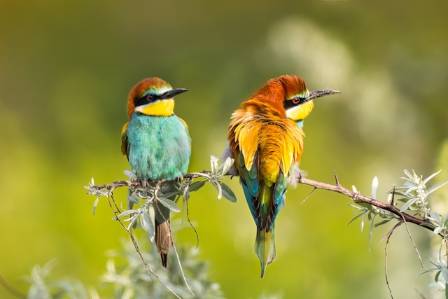
If you have ever seen a bird performing incredible twists, turns, and fast movements through the sky, you may have witnessed the impressive skills of a Rainbow Bee-eater.
With its bright feathers, long curved beak, and unique tail streamers, the Rainbow Bee-eater (Merops ornatus) is one of Australia’s most striking bird species. However, its beauty is only part of what makes it fascinating. This bird is also a highly skilled aerial predator, able to capture insects while flying with remarkable accuracy and speed.
Distribution and Natural Habitat
Rainbow Bee-eaters are widely distributed throughout much of Australia, although they are absent from the driest desert areas. Their range also extends into eastern Indonesia, New Guinea, and occasionally the Solomon Islands.
These birds prefer open environments such as forests, woodlands, scrub areas, and cleared landscapes near water sources. These habitats provide suitable locations for hunting insects and building nests.
Feeding Habits and Hunting Skills
Flying insects make up the majority of the Rainbow Bee-eater’s diet. Although bees and wasps are among their preferred prey, they also consume many other insects, including dragonflies, beetles, butterflies, and moths.
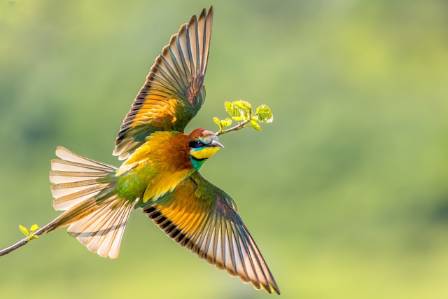
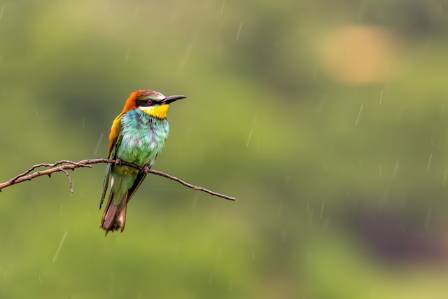
A Rainbow Bee-eater often waits on an exposed branch, fence, or wire while carefully watching its surroundings. Once it spots suitable prey, it launches into the air and rapidly follows the insect using quick movements, sharp turns, and bursts of speed.
After catching an insect, the bird usually returns to a perch before eating its meal. Bees and wasps require special handling because of their dangerous stings. The bird repeatedly strikes the insect against a branch to remove the sting and venom sac before swallowing it, allowing it to safely enjoy its meal.
Breeding and Nesting Behavior
During the breeding season, male and female Rainbow Bee-eaters cooperate to create their nesting site. They dig a long tunnel into sandy ground, with the nesting chamber located at the end.
These tunnels can extend more than one meter underground and may sometimes contain grass or other soft materials. Both parents participate in incubating the eggs and feeding the chicks after they hatch.
In some cases, additional adult birds assist the breeding pair by helping provide food and care for the young, making reproduction a cooperative family effort.
Conservation and Ecological Importance
The Rainbow Bee-eater is currently classified as a species of Least Concern, and its population is considered stable. However, continued access to healthy habitats remains important because these birds depend on suitable areas for feeding, nesting, and raising their young.
As insect-eating birds, Rainbow Bee-eaters contribute to the health of their ecosystems by helping control insect populations. Protecting native environments ensures that these colorful and talented aerial hunters can continue to brighten Australian landscapes with their spectacular flying displays.
Interesting Facts About Rainbow Bee-eaters
Masterful Flyers
Rainbow Bee-eaters capture insects while flying and often perform amazing aerial movements, including sudden turns, dives, and spins.
Experts at Eating Bees
Before consuming bees and wasps, they remove the sting and venom-producing parts by rubbing the insects against a hard surface.
Colorful Migrants
These birds are found across large areas of Australia and also occur in parts of Indonesia, New Guinea, and the Solomon Islands.
Skilled Tunnel Builders
Both parents work together to dig long underground nesting tunnels in sandy soil or riverbanks.
Cooperative Families
Some breeding pairs receive help from other birds, which assist with feeding and caring for the chicks.
संबंधित अपडेट
· en
4 Things You Need To Know About The City Where Burbank Tower, California Is Located.
Hazel Howard

· hi
रीडर्स के अनुसार, हमारे 10 सबसे पॉपुलर लेयर केक
श्वेता

· hi
दुनिया के सबसे खूबसूरत तटीय शहर
आदित्य

· hi
सरल इंटीरियर डेकोर टिप्स जो आपके घर को बदल सकते हैं
मोनिका

· en
Chinese Steamed Buns
Marcus Flynn

· en
10 luxury high‑rise condominium developments
Grace Collins