← मुख्य पन्ना6 मिनट का पाठ
इवेंट रिपोर्ट
7 Facts About the Eiffel Tower You Never Knew About
The 19th century was a period of great instability for France. It began triumphantly with Napoleon's conquest of much of Europe, but a combination of internal conflict and shifting global politics gradually eroded the empire.
M
Miles James
रिपोर्टर
डेस्क नोट
नीचे आयोजन की पूरी रिपोर्ट और महत्वपूर्ण अपडेट पढ़ें।
डेस्क
ग्लोबल इवेंट
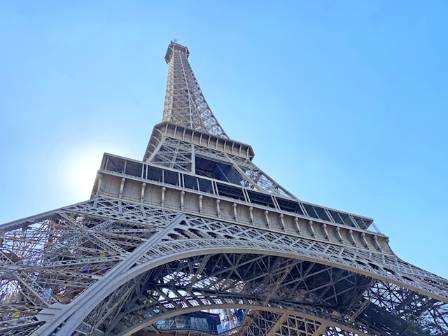
It was constructed partly to restore France's (severely damaged) national pride.
The 19th century was a period of great instability for France. It began triumphantly with Napoleon's conquest of much of Europe, but a combination of internal conflict and shifting global politics gradually eroded the empire. This culminated in a decisive defeat by Germany in the Franco-Prussian War of 1870, which led to the collapse of the Second Empire and a dramatic reduction of French territory. In Paris, which had just been overtaken by London as the world's most populous city, public spirit was at a nadir. The leaders of the nascent Third Republic urgently needed a project to revive national confidence.
They discovered the perfect opportunity in the 1889 World's Fair, envisioned as a grand reintroduction of a modernized Paris looking ahead to the new century. The Eiffel Tower, then the world's tallest man-made structure, was conceived as a crowning jewel for the exhibition. It was designed to showcase France's engineering innovations and artistic talent, while also serving as a potent, traditional symbol of national grandeur. As its chief engineer, Gustave Eiffel, declared, it would make France "the only country with a 300-meter flagpole." Interestingly, the tower was originally permitted to stand for just two decades, but its profound cultural and technical importance secured its permanence.
Initially, it was considered a 300-meter eyesore.
Almost from the moment construction started, a powerful group of Parisian artists and intellectuals voiced vehement opposition. In a widely-publicized petition titled "Artists Against the Eiffel Tower," they wrote:
"We, writers, painters, sculptors, architects, and lovers of the beauty of Paris, which has until now remained intact, protest with all our vigor and all our outrage, in the name of unappreciated French taste, against the construction… of this useless and monstrous Eiffel Tower… To make our point clear, picture for a moment a dizzying, absurd tower looming over Paris like a colossal black factory chimney, whose barbaric mass crushes Notre-Dame, the Tour Saint-Jacques, the Louvre, the Dome of les Invalides, the Arc de Triomphe. All of our humiliated monuments will be swallowed up in this dreadful vision. And for twenty years… we shall see the detestable shadow of this hateful column of bolted metal stretching out like a blot of ink."
The cultural elite derisively called it the "Metal Asparagus" or, less kindly, a "solitary, perforated suppository." A frequently told, though likely fictional, anecdote claims that the author Guy de Maupassant often dined in the tower's restaurant because it was the sole place in Paris where the structure itself was not visible.
Gustave Eiffel also contributed to another famous monument.
Eiffel did not personally draw the initial blueprints for his namesake tower; the concept was developed by his colleagues, Émile Nouguier and Maurice Koechlin. However, they created it under his supervision at his firm, the Compagnie des Établissements Eiffel. This was not the first globally significant monument the team had influenced. In 1879, the original engineer for the Statue of Liberty (also a French creation), Eugène Viollet-le-Duc, died unexpectedly. The project needed a new expert in large metal frameworks. Eiffel and Koechlin discarded Viollet-le-Duc's plan to have the statue's copper skin support its own weight, and instead designed a robust internal iron skeleton to hold Lady Liberty upright. Thus, the same engineering brilliance responsible for the Eiffel Tower's 2.5 million rivets also provided the structural backbone for New York's most iconic statue.
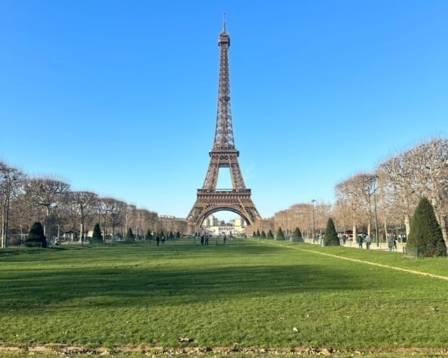
Despite the critics, the public adored it from the start.
In its inaugural year, the tower welcomed two million visitors. Today, it receives approximately 6.9 million annually, amounting to a cumulative total of around 250 million since 1889. Its first notable guests included eight African monarchs, the Prince of Wales, Thomas Edison, and Buffalo Bill. It continues to hold the title of the world's most visited paid monument, its iconic iron lattice never failing to enchant both tourists and Parisians.
The tower's lack of a specific purpose has become its defining quality.
As the philosopher Roland Barthes observed, "The Tower attracts meaning the way a lightning rod attracts thunderbolts." Since the early 20th century, it has served the practical function of broadcasting radio and television signals. Yet, this has not prevented countless individuals from projecting their own meanings onto it, often in extravagant ways. The most common is simply ascending it—originally a climb of 1,710 steps, though elevators are now available. Many have gone further: athletes have raced up its stairs, a cyclist once rode down from the summit, climbers have scaled its sides, and parachutists have jumped from it. Two different pilots have attempted to fly aircraft between its pillars, with only one succeeding. Sadly, the tower has also been the site of approximately 380 suicides. Despite this, the Eiffel Tower endures, transcending mere utility to stand as an icon that signifies whatever one wishes it to.
It was the world's tallest structure for over four decades.
Though it no longer ranks among the world's tallest buildings, the Eiffel Tower (1,063 feet) remained the global champion for nearly half a century after its completion, only being surpassed by New York's Empire State Building. While the 2.5 million rivets used in its construction are a commonly cited marvel, an even more impressive maintenance statistic exists: to prevent the iron from rusting, the entire structure is repainted every seven years, a process requiring 60 tons of paint. This upkeep is as monumental as the tower itself, with a team of painters taking nearly 18 months to complete the task.
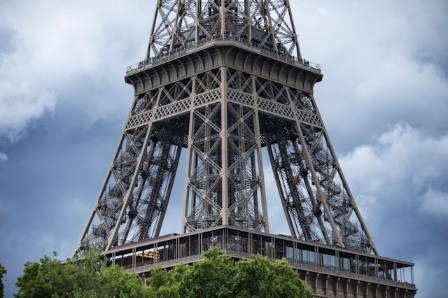
A Guide to Visiting the Eiffel Tower
The tower is situated where the Quai Branly meets the Champ de Mars. It is accessible by several bus lines (42, 69, 72, 82, 87 to Champs de Mars), the RER commuter train (Line C), and the Paris Metro (Bir Hakeim station). Its operating hours are generous but vary seasonally. From September to mid-June, it is open from 9:30 AM to 11:45 PM. From mid-June to early September, hours extend from 9:00 AM to midnight. Hours are also longer during Easter weekend. The final elevator to the top departs 45 minutes before closing, and access to the summit may be restricted in poor weather.
There are three primary ways to experience the Eiffel Tower. First, you can stroll around its base free of charge. Second, you can purchase a ticket to climb the stairs to the second floor. While cheaper, this is physically demanding and not recommended for those with health issues or young children, though it offers a great sense of achievement.
Two different elevator options are available: one goes to the second floor, and a more expensive one continues to the very summit. All tickets are sold at the same booths, leading to potentially long queues during peak season. Even with a pre-purchased elevator ticket, you will still wait in a (typically shorter) line to board. The best strategies to avoid long waits are to buy tickets online well in advance or to join a guided tour that includes pre-reserved access. Remember, the summit provides unparalleled panoramic views of Paris from 276 meters up, solidifying its status as the city's premier observation deck.
संबंधित अपडेट
· hi
ओलंपियन मानव प्रदर्शन की 'सीमाओं' को कैसे पार करते हैं
नीता
· en
The worlds simplest powered boat
Liam Carter
· hi
मिल्की वे गैलेक्सी
जूलियन डेल्केंटन

· hi
एक सदाबहार स्कार्फ का चयन: व्यक्तिगत उपयोग या उपहार देने के लिए एक मार्गदर्शिका
स्नेहा पांडित
· en
Artist Reimagines Canada’s Mountain Ranges as Vibrant Geometric Landscapes
Isabelle Montrose
· hi
गर्मी से बचें: समुद्र तट पर आपकी ठहराव को प्रेरित करने के लिए बीच हट्स
हर्ष