← मुख्य पन्ना3 मिनट का पाठ
इवेंट रिपोर्ट
Forests and Rivers in the Alpine Lakes Region
This area is still largely forested—something rare in many mountainous regions—and it’s the scale and richness of these forests that make the Cascades stand out. While other ranges may have higher peaks, few offer forest ecosystems as spectacular, except perhaps the Olympic Mountains.
L
Liam Foster
रिपोर्टर
डेस्क नोट
नीचे आयोजन की पूरी रिपोर्ट और महत्वपूर्ण अपडेट पढ़ें।
डेस्क
ग्लोबल इवेंट
Forests
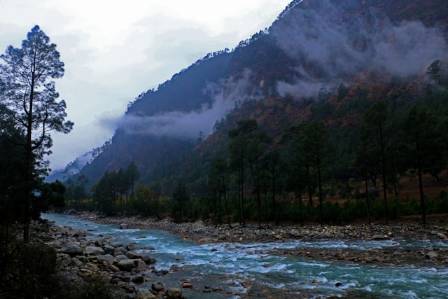
This area is still largely forested—something rare in many mountainous regions—and it’s the scale and richness of these forests that make the Cascades stand out. While other ranges may have higher peaks, few offer forest ecosystems as spectacular, except perhaps the Olympic Mountains.
On the west side of the Cascades, forests are part of a mighty temperate rainforest belt that once stretched from northern California through to coastal Alaska.
The forests are customarily divided into zones—western hemlock, silver fir, and mountain hemlock—though where one zone ends and another begins depends on elevation, soil type, slope directions, and how much sun exposure there is. For instance, north-facing slopes may host high-elevation species even at low elevations (~2000 ft), whereas sunny, dry slopes can support them much higher.
Western Hemlock Zone: Usually below 3000 ft. These are “cathedral forests,” with tall, impressive trees and lush growth of mosses, lichens, and rich undergrowth. The ideal of “old-growth” refers to forests that have never been logged—places where trees, soil, and micro-ecosystems have evolved undisturbed.
Douglas Fir: Particularly on well-drained south and west slopes under 3000 ft, there are Douglas firs that reach enormous heights (up to 250 ft) and large trunk diameters (over 8 ft). Old-growth Douglas fir forests are rare but survive in isolated patches.
Western Red Cedar & Western Hemlock: Cedar, graceful and striking, is often called the “queen” to Douglas fir’s “king.” Hemlock is everywhere else—not always as showy, but fundamental.
Silver Fir Zone: Between ~2500–4500 ft. These are cooler, often shrouded in mist; silver fir and hemlock dominate. There are also noble firs in some pockets.
Mountain Hemlock / Subalpine Zone: From ~4000–5500 ft (varies with slope and exposure). These forests have mountain hemlock, subalpine firs, and even Alaska cedars. In many places you’ll see meadows, flowers, and mix of snow-laden forested patches.
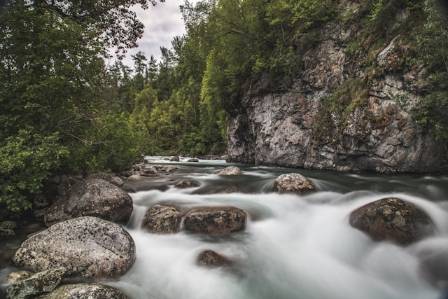
Deciduous trees make an important contribution too—red alder, which fixes nitrogen and helps restore damaged terrain, black cottonwood in lower elevations, bigleaf maple (often enormous and draped in moss), and other species like Pacific crabapple, bitter cherry, dogwood, hazelnut.
Second-growth forests—those that regrew after earlier logging (especially in river valleys and lowland areas)—have matured significantly, with trees often over 100 years old and hundreds of feet tall. If left alone, many of these second-growth areas could eventually regain old-growth character. Unfortunately, some of them have been subject to “restoration” logging, which in many cases has done more harm than good—creating disturbances, slash, roads, and degrading habitat rather than helping it recover.
Alpine zones (above tree-line) and rugged ridges border these forests; the Rocky terrain, meadows, lakes, and high elevation habitats add dramatic contrasts to the forest zones.
Rivers and Waters
The river systems in the Alpine Lakes area are naturally divided into four large watershed regions:
Northwest (Skykomish)
Southwest (Snoqualmie)
Northeast (Wenatchee)
Southeast (Yakima)

Some of these rivers are popular with rafters and kayakers, especially the Skykomish and Wenatchee. The Skykomish in particular is a prime salmon spawning river.
But not all is ideal. Rivers like the Wenatchee and Yakima suffer from high withdrawals of water for agriculture and development, and dams block or complicate fish migration upstream.
Native fish like cutthroat trout live in many of the rivers and streams. Many lakes—most of which originally had no fish—have been stocked with rainbow, cutthroat, golden trout, or char species. In some lakes these introduced populations have become self-sustaining, but they often come at the cost of native amphibians.
A growing threat to smaller streams and creeks is low-power hydroelectric development. Because there’s a market requirement to buy the power produced, developers have financial incentives to build projects—sometimes with little consideration of environmental impacts
संबंधित अपडेट

· hi
परफेक्ट पॉपकॉर्न
अमित
· en
How to Raise Garden Ducks and the Ultimate Secrets for Beginners
Marshall Theo
· en
The worlds simplest powered boat
Liam Carter
· hi
सूरजमुखी: इतिहास, उपयोग और पौधे की जानकारी
मानव
· en
A Guide to Sustainable Tapestries and Wall Hangings for the Modern Home
Micheal
· en
6 most worthwhile winter sceneries
Jackson