1.1984: The Rugged Ride to Uluwatu’s Shores
In 1984, I clung to the back of legendary surf traveler Randy Rarick’s motorcycle, bouncing over a crushed limestone track that snaked through the Bukit Peninsula’s terraced fields and open glens toward Uluwatu’s ravine. The trail, barely navigable even on a dirt bike, had only been hacked through days earlier—before that, visitors trekked in from the temple road. We’d hired two young Pecatu village girls, Wayan and Made, to carry our surfboards on their heads for the two-mile hike; the three dollars they earned that day tripled what they might make in rice paddies or limestone quarries, a stark reminder of the region’s quiet hardship. The morning air hung thick with heat, and the young acacias lining the path offered little shade. Silence dominated save for the northeast trade wind rustling through leaves, the delicate tinkle of bells around Bali’s doe-like cattle, and the roar of our 250cc engine revving in third gear, cutting through the stillness as we closed in on the coast. For Wayan and Made, this was just another day of backbreaking work; for me, it was the start of an adventure that would etch itself into my memory forever.
2.The Bluff: First Glimpse of Outside Corner’s Majesty
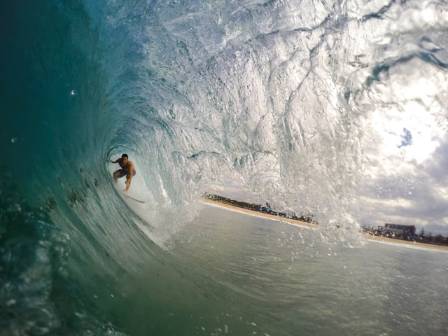
When Randy and I reached the bluff above the reef, the surf remained hidden—but its presence thundered in our ears, a distant, low booming like controlled demolition beyond the trees. We parked the bike under a low cane-thatched shed, where a well-worn path wound down to the ravine’s mouth, shaded by mimosa canopies that cooled the air and muted the world above. Around a corner, Uluwatu burst into view—a sight that ranks among surfing’s greatest revelations. Craggy limestone cliffs plummeted to the sea, dotted with green creepers and topped with dense shrubs; a gaping cave led through to the reef, where blue-and-silver waves curled with hypnotic uniformity, their faces illuminated by the dark coral below. Unlike chaotic swells that topple like dominoes, these waves moved sideways along the reef, a lace curtain of water unfurling across the horizon. The surf stood 10 feet plus, crashing fiercely at Outside Corner—a section that only breaks on the largest swells and perfect tides, still a realm of heroes even by the mid-1980s, when Uluwatu’s main peaks had grown crowded. Randy’s eyes lit up: “Yeah… Finally some real waves. We’re out there.” His words sent a knot of nerves twisting in my stomach.
3.The Cave Entrance: Made’s Wisdom and My Quiet Terror
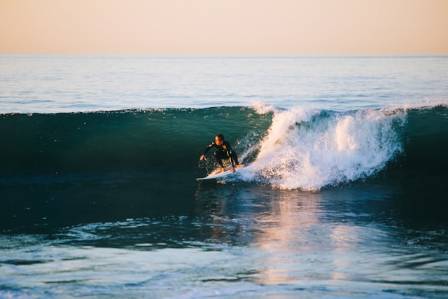
As we waited for Wayan and Made to deliver our boards, Randy and I stood under the eaves of one of Uluwatu’s first open-air thatched warungs, watching the sets build. The crowd included chattering Balinese board carriers, kids, vendors, and a contingent of international surfers—Japanese, Brazilian, American, Aussie—though few dared venture out. The only access was a slippery bamboo ladder into a sea cave, where waves lashed the walls and echoes amplified the ocean’s power. Those who braved it paddled through the cavern into daylight, only to face short, spectacular drops and brutal wipeouts. One surfer’s leash snapped, his board swept toward Padang-Padang as he clung to jagged limestone, caught in a rip current—every surfer’s high-tide nightmare. I’d ridden Uluwatu’s main peak and the Racetrack before, but Outside Corner felt like a different beast: Bali’s heaviest challenge, a test of courage I wasn’t sure I was ready for. When 16-year-old Made arrived with my 6’6” Al Merrick pintail—too short for the conditions, but the biggest board I owned—she sensed my fear. Having carried boards since age 12, she was surf-savvy beyond her years, standing steady on the slimy limestone with battered feet. She bit her lip, looked me in the eye, and said simply: “Let the first wave go by. Don’t take close outs.” In that moment, this quiet girl in a tattered skirt understood me better than anyone. She handed over my board, knowing I’d go out anyway.
4.Into the Lineup: Riding Outside Corner’s Fury
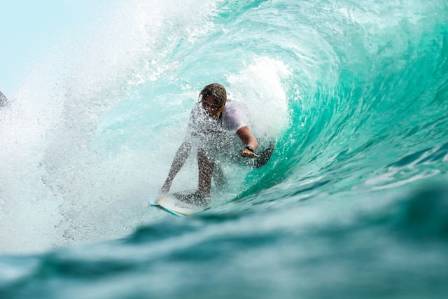
Against my better judgment, I followed Randy down the bamboo ladder, clinging to the rungs as waves crashed below. We timed our entry perfectly, paddling through the cave with dry heads—a small miracle. From the water, Uluwatu’s cliffs loomed even more foreboding, their white stone streaked with green vines, undercut beyond vertical. Legend held that 17th-century Hindu priests had thrown themselves from these cliffs to avoid capture by Javanese invaders; as I paddled toward the outside lineup, five strokes behind Randy, I felt a fleeting kinship with their desperation—though my ritual would be slower, more humiliating, with an audience of kids and nervous surfers watching from the bluff. The swells stacked up a mile away at “The Temple of Doom,” giving us time to prepare. When they hit Outside Corner, they bent sharply, the Indian Ocean’s power concentrating into a launching pad. Positioning was everything: get in early, drop smoothly, then hold on as the wave re-gathered momentum and raced north. Kick out too late, and the curl would mow you down; kick out too soon, and you’d miss the ride. I survived three cycles, riding each wave all the way across the reef, my adrenaline masking fatigue. By then, I thought I could head in with dignity—but the tide had dropped, exposing sharp coral that blocked the cave entrance. The 100-yard stretch from water to cliff base was now a minefield of jagged rock, and going in meant scrambling over it before the next set hit.
5.Trapped: The Terror of Trying to Shore
After my third ride, I attempted to land, but the sight of the next set—churning down the reef like a gargantuan shark feeding—paralyzed me. I turned tail, paddling back to the lineup, hoping for a lull. But there were none: the swell was too strong, too perfect for big-wave riders like Randy. Each time I tried to shore, fear drove me back into deep water. It was the most daunting session of my life: afraid to go out, now afraid to come in. Sitting in the lineup, I burned with self-recrimination. My plan? Do nothing stupid. The big waves were safe enough to ride—thrilling, even—so I’d stay out for three or four hours, waiting for the tide to rise and cover the coral. I surfed through a full tidal shift, nearly five hours total. The kids on the cliff must have wondered why I craned my neck toward shore after each ride, not out to the waves. Sunburned, dehydrated, and exhausted, I finally caught a wave in, prone-paddling through the soup, back through the cave’s cleft, and onto the cool, damp sand of the limestone cavern. I dropped to my knees, humiliated—my trepidation had been obvious to everyone. Then I heard voices echoing from above: “Samgeorge! Samgeorge! Ironman! Ironman!”
6.“Ironman”: The Accidental Title
I looked up to see Made picking her way down the rickety bamboo ladder, ready to carry my board. Behind her danced a group of shirtless, shoeless kids, hopping like tree frogs in the backlight. “Samgeorge, five hours! Samgeorge, five hours!” they chanted, their pidgin patois ringing through the cave. “Ironman!” Made said nothing, just picked up my board, balanced it on her head with a towel coiled underneath, and walked up the ladder without using her hands—effortless, graceful, as if she’d done it a thousand times. I followed shakily to the warung, where my brother Matt, friends Jimmy Hunter and Bernie Baker, and Randy waited. Randy, who’d caught his fill and gone in when he pleased, sat in the shade finishing baked avocado jaffles and a Bintang beer, with Wayan massaging his shoulders. “You got some good waves,” he said. I muttered a reply as a young grommet named Froggy handed me a cold Coke. “Five hours,” Froggy whispered to Made, who stood beside me wiping sweat from her forehead. She nodded bluntly: “Sure. Ironman.” Then, leaning in so only I could hear: “Let’s go.”
7.Redemption: Made’s Unspoken Promise
Made knew the truth behind my “Ironman” title—she’d seen my fear, my hesitation, my desperate wait for the tide. We walked out together, Wayan and Randy on the motorcycle ahead, while Made carried my board once more. When we reached the main road to the temple, the rest of the crew waited, having passed us on the trail like a half-naked bike gang. I handed Made her payment, and she tucked the bills into the waistband of her skirt. “Swell dropping, I think,” she said, her wise young eyes meeting mine. “You come tomorrow.” In that glance, I found redemption—or at least relief. Her expression seemed to say: “Your secret is safe with me. But if you come back, you might earn that title for real.” I never forgot those words. Made’s quiet courage, her intuition, her refusal to judge—they stayed with me, a reminder that bravery isn’t the absence of fear, but the choice to keep going despite it. Thanks to her, I’ve never stopped trying to earn that “Ironman” title, to face the waves that scare me, to honor the trust she placed in me that day at Uluwatu. Some adventures don’t just change your story—they change who you are.